Lemon Thyme Salmon and Asparagus
Highlighted under: Fresh Food | Clean Eating
I absolutely love how fresh and vibrant this Lemon Thyme Salmon and Asparagus dish is! With a brief marinade that amplifies the salmon's natural flavors, it transforms dinner into something truly special. The fragrant notes of thyme paired with the zesty lemon create a delightful taste that brightens this meal. Plus, it’s a one-pan recipe, making cleanup a breeze while I savor every bite. This dish comes together quickly, perfect for a weeknight meal or a casual dinner party with friends.
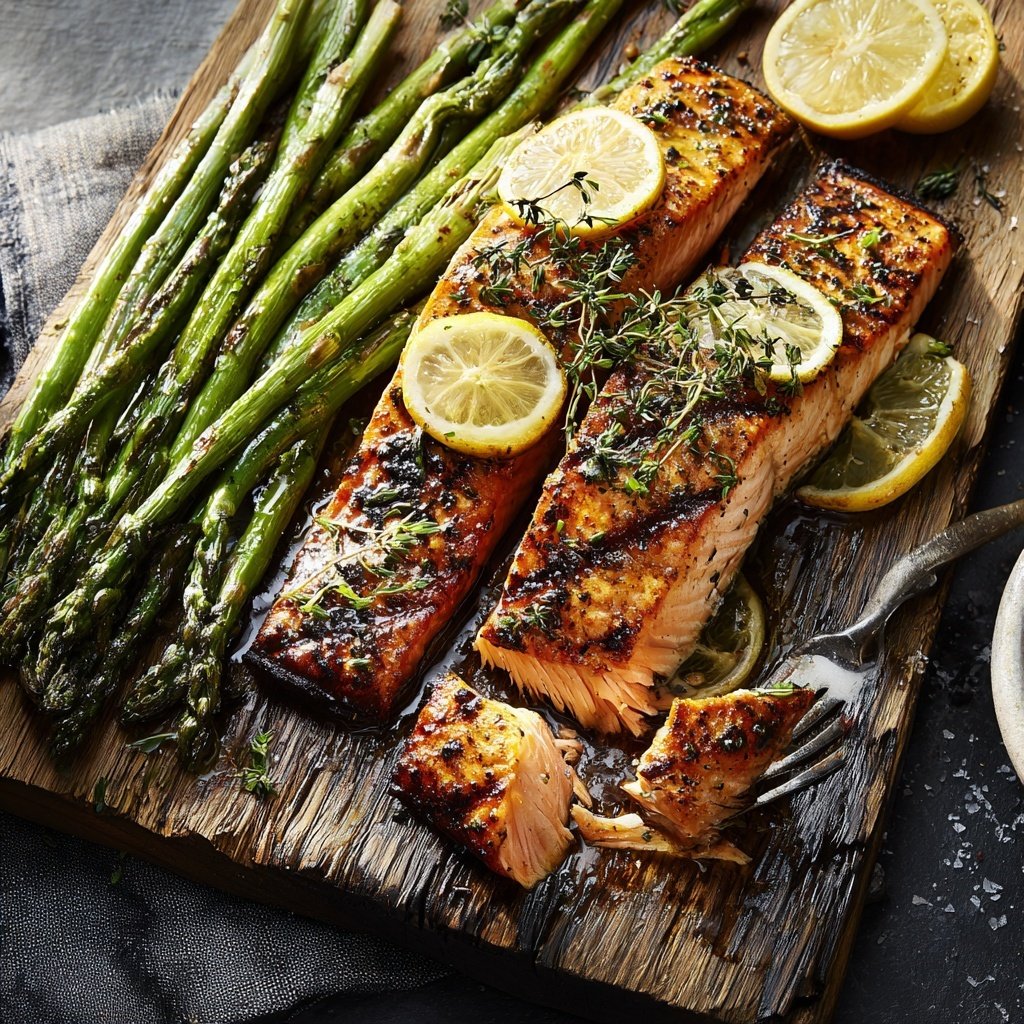
When I first made this Lemon Thyme Salmon and Asparagus, I was amazed at how quickly everything came together. I marinated the salmon in lemon juice, thyme, and garlic for just a short while, and the result was a flavor explosion! I also discovered that roasting asparagus alongside the salmon not only saves time but allows the flavors to mingle beautifully.
Additionally, I learned a little trick – using fresh thyme instead of dried significantly elevates the taste. The aroma that fills the kitchen while everything bakes is simply irresistible, making it a meal that feels both luxurious and comforting at the same time.
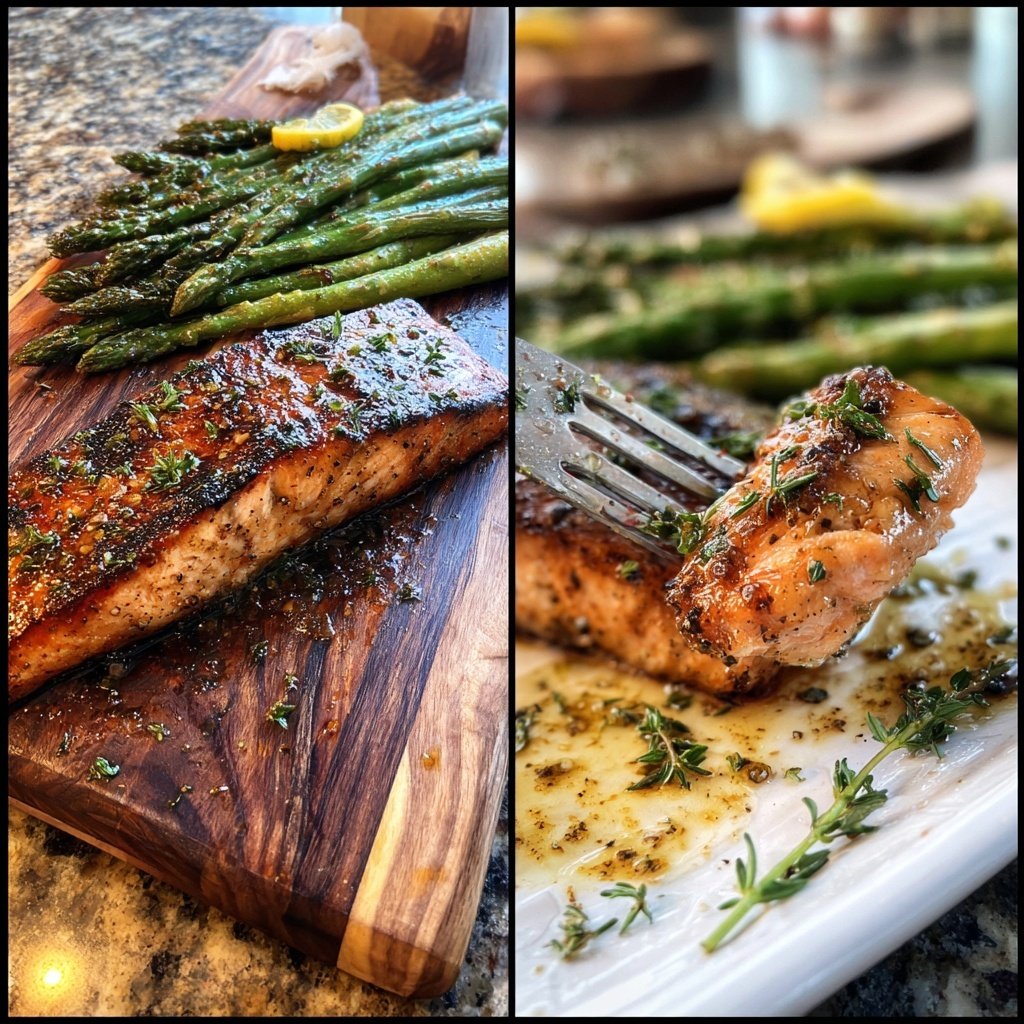
Why You'll Love This Recipe
- Bright citrus notes elevate the dish
- Perfectly cooked salmon with crispy edges
- Healthy and simple one-pan meal
The Role of Fresh Ingredients
Using fresh thyme is essential in this Lemon Thyme Salmon and Asparagus dish. Its aromatic quality elevates both the salmon and asparagus, adding depth to the overall flavor. I recommend choosing vibrant, bright green thyme sprigs for the best taste. Dried thyme can be used in a pinch, but the flavor profile won't be as bright and fresh. If you want to experiment, fresh dill is a delightful alternative that pairs well with salmon.
Another key element is the citrus aspect. The juice and zest of the lemon not only balance the richness of the salmon but also enhance its natural flavors. For an extra zing, consider adding a splash of white wine to the marinade, which introduces acidity and a nuanced layer of flavor. Always opt for fresh lemons over bottled juice for the best results.
Marinating Techniques
Marinating the salmon for 10 minutes is crucial for infusing flavor without overpowering the fish. The acidity from the lemon juice begins to break down the protein, which helps to keep the salmon tender when cooked. I suggest using a zip-top bag for more even coverage of the marinade, ensuring that each fillet is well-coated. If you're short on time, a quick 5-minute marinade still provides a burst of flavor, but extending it to 30 minutes can yield even more pronounced results.
As you prepare the asparagus, pay attention to trimming the ends to remove the woody bits that can affect the texture. When roasting, a light drizzle of olive oil not only helps to achieve that desirable crispness but also allows the asparagus to cook evenly. Look for vibrant green stalks that retain a slight crunch when adjusting cooking times; overcooked asparagus will become mushy.
Serving and Storage Suggestions
This dish is perfect served hot straight from the oven, but it also makes for a great cold salad option the next day. Pair the salmon and asparagus with a side of quinoa or couscous for a satisfying meal. If you have any leftovers, store them in an airtight container in the refrigerator for up to two days. To reheat, gently warm in the oven at 350°F (175°C) for about 10 minutes to maintain the salmon's texture.
For an added twist, consider drizzling with balsamic glaze or serving with a dollop of garlic aioli. You can also swap out the asparagus for other vegetables like broccoli or green beans, adjusting the cooking time based on their thickness. This flexibility allows for seasonal variations, keeping the recipe fresh and exciting.
Ingredients
Gather these fresh ingredients for an unparalleled flavor experience:
Main Ingredients
- 4 salmon fillets
- 1 bunch of fresh asparagus
- 1 lemon, juiced and zested
- 2 tablespoons fresh thyme, chopped
- 2 tablespoons olive oil
- 2 garlic cloves, minced
- Salt and pepper to taste
Ensure all ingredients are fresh for the best taste!
Instructions
Follow these simple steps for a delicious outcome:
Prepare the Marinade
In a small bowl, combine the olive oil, lemon juice, lemon zest, minced garlic, chopped thyme, salt, and pepper. Mix well and set aside.
Marinate the Salmon
Place the salmon fillets in a shallow dish and pour the marinade over them. Allow the salmon to marinate for 10 minutes while you prepare the asparagus.
Preheat the Oven
Preheat your oven to 400°F (200°C).
Prepare Asparagus
Trim the woody ends off the asparagus and place them on a baking sheet. Drizzle with olive oil and season with salt and pepper.
Bake the Dish
After marinating the salmon, place it on the same baking sheet as the asparagus. Bake for 15-20 minutes or until the salmon is cooked through and flakes easily with a fork.
Serve hot and enjoy your delightful meal!
Pro Tips
- For extra flavor, consider adding a sprinkle of feta on top before serving or pairing your dish with a side of quinoa.
Cooking Times and Visual Cues
When baking the salmon, it's crucial to keep an eye on it between the 15-20 minute mark. The salmon is done when it turns opaque and flakes easily with a fork. If you're unsure, using an instant-read thermometer can help; aim for an internal temperature of 145°F (63°C). This ensures both safety and perfect texture—a dry salmon fillet is a common cooking failure to avoid.
In terms of the asparagus, you want to pull it out of the oven once it’s bright green with golden edges, which indicates it has been roasted perfectly while retaining that slight crunch. Timing is crucial: if you leave it in alongside the salmon too long, it may lose its vibrant color and become overly soft.
Tips for a One-Pan Wonder
For a successful one-pan meal, ensure all the ingredients are prepped and ready to go before baking. This not only saves time but also helps maintain even cooking. Lay the salmon fillets skin-side down on the same baking sheet as the asparagus; this way, they can share the flavors and juices as they cook together. Just be cautious that the salmon fillets aren’t crowded on the pan, which can lead to steaming instead of roasting.
To maximize flavor, consider adding cherry tomatoes or thinly sliced bell peppers to the pan. They roast beautifully alongside the asparagus and add a touch of sweetness that complements the citrus notes in the dish. Remember, a well-balanced plate not only looks appealing but also enhances your dining experience.
Questions About Recipes
→ Can I use frozen salmon for this recipe?
Yes, but it's best to thaw it completely before marinating and cooking.
→ What else can I add to this dish?
Feel free to include other vegetables like cherry tomatoes, bell peppers, or carrots for more variety.
→ How can I ensure my salmon stays moist?
Marinating the salmon is key, and be careful not to overcook it as this can dry it out.
→ Is there a substitute for thyme?
You can use other herbs like rosemary or dill for a different flavor profile.
Lemon Thyme Salmon and Asparagus
Created by: The Chefliambakes Team
Recipe Type: Fresh Food | Clean Eating
Skill Level: Intermediate
Final Quantity: 4 servings
What You'll Need
Main Ingredients
- 4 salmon fillets
- 1 bunch of fresh asparagus
- 1 lemon, juiced and zested
- 2 tablespoons fresh thyme, chopped
- 2 tablespoons olive oil
- 2 garlic cloves, minced
- Salt and pepper to taste
How-To Steps
In a small bowl, combine the olive oil, lemon juice, lemon zest, minced garlic, chopped thyme, salt, and pepper. Mix well and set aside.
Place the salmon fillets in a shallow dish and pour the marinade over them. Allow the salmon to marinate for 10 minutes while you prepare the asparagus.
Preheat your oven to 400°F (200°C).
Trim the woody ends off the asparagus and place them on a baking sheet. Drizzle with olive oil and season with salt and pepper.
After marinating the salmon, place it on the same baking sheet as the asparagus. Bake for 15-20 minutes or until the salmon is cooked through and flakes easily with a fork.
Extra Tips
- For extra flavor, consider adding a sprinkle of feta on top before serving or pairing your dish with a side of quinoa.
Nutritional Breakdown (Per Serving)
- Calories: 360 kcal
- Total Fat: 18g
- Saturated Fat: 4g
- Cholesterol: 70mg
- Sodium: 150mg
- Total Carbohydrates: 10g
- Dietary Fiber: 3g
- Sugars: 2g
- Protein: 35g